
Want a holiday that mixes ancient ruins, volcanic drama, seafood feasts and lazy Mediterranean beaches—all without the sterile resort feel? Sicily delivers. This guide is written for travellers from Canada who want the full picture: how to get there, when to go, how to move around, what to eat, what to watch out for, and how to plan itineraries that actually flow. Read on and you’ll be able to pick dates, budget realistically in Canadian dollars, and hit Palermo or Taormina with confidence.
What this article covers
By the end you’ll have:
- Practical travel-entry and health information for Canadians
- Transport tips—flights, ferries, trains, cars (and how to manage ZTLs)
- Season-by-season advice and festival timing
- Detailed highlights—cities, ruins, volcanoes, islands, food and wine
- Sample 7-, 10- and 14-day itineraries and budgets in CAD
- Packing lists, safety considerations, and FAQs
Quick facts about Sicily
Sicily (Italian: Sicilia) sits off the tip of Italy’s boot and is the Mediterranean’s largest island. It’s a patchwork of Greek temples, Norman cathedrals, volcanic slopes and sun-baked beaches. Major cities include Palermo (regional capital), Catania, Messina, Syracuse (Siracusa) and Agrigento. Mount Etna dominates the east; the Aeolian Islands are to the north; Lampedusa lies far to the south near Africa.
Fast essentials
- Currency: Euro (EUR) — prices converted in examples to Canadian dollars (CAD)
- Language: Italian; Sicilian dialects common in smaller towns; English is widely understood in tourist areas but less so in rural villages
- Time zone: Central European Time (CET) / Central European Summer Time (CEST)
- Best seasons: shoulder seasons (April–June, September–October) for weather and fewer crowds
When to visit Sicily: timing, weather and crowds
When is Sicily at its best? It depends on what you want. If sand and full sun are your priority, July and August deliver. But you’ll face stifling heat, and locals tend to retreat midday. For hiking, exploring ruins and avoiding queues, April–June and September–October are sweet spots—warm days, cooler nights and manageable crowds. Winter is mild, sometimes rainy, and a terrific time for lower prices and local life without tour groups.
Every season has a trade-off. Want festival energy? Try spring and early summer for religious processions and food festivals. Want lower prices and local markets in full swing? Late autumn and winter are convincingly Sicilian, quieter, and atmospheric.
Climate snapshot
Sicily has a Mediterranean climate: hot, dry summers and mild, wetter winters. Coastal areas rarely face freezing temperatures; inland and hilltop towns can be cooler at night. Mount Etna can carry snow in winter even as the coast enjoys 12–15°C days.
Getting to Sicily from Canada
Canadians typically fly to Sicily via a connecting city in Europe. Here are the common patterns and what to expect when booking.
Routing and flight times
Direct transatlantic flights to southern Italy are limited. Most travellers fly from Toronto, Montreal, or Vancouver to Rome (Fiumicino) or Milan (Malpensa) and then connect domestically to Palermo (PMO) or Catania (CTA). Flight times: Toronto–Rome roughly 8–9 hours; Vancouver–Rome about 11–12 hours. Add a 1–2 hour domestic connection to Sicily, or a short hop on low-cost carriers like Ryanair, Volotea, or ITA Airways. In summer, some airlines offer seasonal direct flights to Catania or Palermo—check schedules early.
Tip: flying into Rome and taking a domestic flight to Catania is often cheaper and saves hours of overnight rail travel if your schedule allows. Another option for travellers who love scenic routes: fly into Naples then take a train and ferry—but that route is longer and more complex.
Costs and booking tips (CAD)
Rough price ranges from Canada (round-trip, economy):
| Route | Low-season | Shoulder | Peak (summer) |
|---|---|---|---|
| Toronto – Rome + domestic to Sicily | $900–$1,300 | $1,200–$1,600 | $1,600–$2,400 |
| Vancouver – Rome + domestic | $1,100–$1,600 | $1,300–$1,900 | $1,800–$2,800 |
| Montreal – Rome + domestic | $950–$1,400 | $1,200–$1,700 | $1,700–$2,500 |
Prices vary widely with deals and sales. Booking 3–5 months ahead for summer travel usually helps. Consider open-jaw tickets (in via Palermo, out via Catania) to save backtracking time.
Entry, visas and travel documents for Canadians
Canadian passport holders currently enjoy visa-free travel to Italy for short stays (typically up to 90 days within a 180-day period) for tourism and business. Sicily is part of Italy and the Schengen Area, so the same rules apply.
What to check before you go
- Passport validity: Keep it valid at least three months beyond your planned departure from the Schengen Area; six months is a safer buffer.
- ETIAS: A new European travel-authorisation system (ETIAS) has been announced for visa-exempt travellers—check the official EU/Italian government site before departure to see if this affects your trip.
- Travel insurance: Not mandatory for entry but strongly recommended. Many Canadian insurers offer policies covering medical evacuation back to Canada. Make sure your policy covers emergency medical care in Italy and any adventure activities you plan (volcano hiking, boating).
Money, tipping and typical costs in Sicily
Sicily is generally cheaper than northern Italy, but tourist hotspots will still command higher prices. Here’s how to budget and manage money effectively.
Currency and ATMs
The euro is the currency. ATMs (bancomat) are widespread in cities and large towns, but some smaller villages may not have easy access. Notify your Canadian bank before travel to avoid card blocks and ask about foreign transaction fees. Many places accept Visa and Mastercard; American Express is less commonly accepted.
Tipping etiquette
Tipping isn’t obligatory but is appreciated. Round up taxi fares, leave 5–10% at casual restaurants if service is good, and small euros for hotel porters and cleaning staff. Many restaurants add a “coperto” (cover charge) and a service line; check the bill before leaving a tip.
Daily cost examples (per person, CAD)
These are approximate and depend on travel style:
| Style | Daily budget (CAD) | Includes |
|---|---|---|
| Budget | $80–$130 | Hostel/B&B, public transport, simple meals |
| Mid-range | $150–$300 | 3-star hotel, rental car one day, guided tours, sit-down meals |
| Luxury | $400+ | High-end hotels, private transfers, fine dining |
Getting around Sicily: transport options
Transport is a core decision. Do you rent a car and take the island at your own pace, or rely on trains and buses? Each choice carries trade-offs.
Renting a car
Renting a car offers freedom—great for rural exploration and vineyard detours. Expect daily rental rates (economy car) roughly $45–$120 CAD depending on season. Add fuel, tolls, parking and optional insurance. Gasoline in Italy is expensive compared to Canada—typically higher than $2.00 CAD per litre (prices fluctuate). Autostrade (toll highways) are common between major cities in the north and east; toll booths are straightforward.
Important: consider an International Driving Permit (IDP) alongside your Canadian licence. Italian police may ask for it. Also watch for ZTL zones—Historic centers (centri storici) often restrict vehicle access. Entering a ZTL by mistake can trigger fines sent to your rental company.
Trains and buses
Trenitalia operates regional and InterCity trains; travel along the east coast between Messina and Syracuse is scenic. Train speeds can be slower than expected, and rail service off major corridors is limited. Buses (by companies like AST, Interbus, SAIS) fill gaps and often reach villages trains do not. For island hopping, ferries are the norm.
Ferries and island connections
Ferries connect Sicily to mainland Italy, Sardinia and the Aeolian Islands. The Strait of Messina link carries cars and trains on ferries. For the Aeolias (Lipari, Vulcano, Stromboli) or Lampedusa and Linosa, check seasonal timetables—many routes run only in warmer months.
Driving in Sicily: what Canadians should know
Driving Sicilian roads is part practical and part theatre. Narrow streets, dramatic landscapes and local driving styles require attention.
Practical rules and tips
- Drive on the right-hand side.
- Seat belts are mandatory for all occupants.
- Legal blood alcohol limit is 0.5 g/L; many recommend zero alcohol if driving.
- Watch for mopeds and scooters weaving through traffic in towns—slow down and give space.
- In medieval centres look for restricted-traffic zones (ZTL): access is monitored by cameras—avoid entering unless you have authorization.
- Fuel stations may close midday in small towns—plan ahead.
Top places to visit in Sicily
Sicily is large and diverse. Below are must-see highlights with practical tips—what to do, when, and how long to stay.
Palermo: a chaotic, charming capital
Palermo is baroque churches, street markets, Arab-Norman mosaics and lively street food. Don’t miss the Norman Palace and Palatine Chapel, the Cappella Palatina, and Quattro Canti. Wander the Ballarò and Vucciria markets for arancini, pani ca’ meusa (spleen sandwich) and cannoli.
Practical tip: Palermo’s centre is walkable but busy. Use taxis at night and avoid leaving valuables exposed. Spend 2–3 days to taste the city and take a day trip to Monreale to see an extraordinary cathedral mosaic.
Monreale and Cefalù
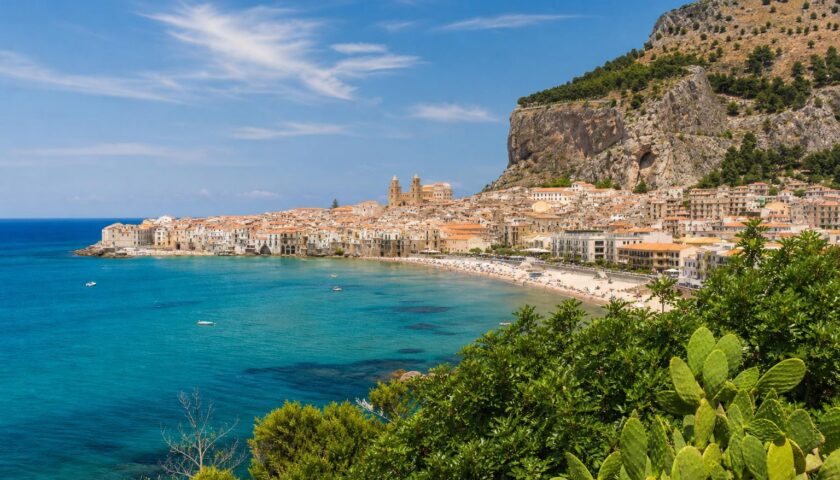
Monreale’s cathedral is a short drive from Palermo and contains one of Europe’s richest mosaics. Cefalù, a seaside medieval town, pairs a gorgeous beach with a hilltop Norman cathedral. These are ideal day trips from Palermo or nice stops on a coastal route.
Valley of the Temples, Agrigento
One of Sicily’s crown jewels: an evocative landscape of Greek temples rising from wheat fields. Visit at dawn or dusk to avoid crowds and heat. Agrigento town has museums and viewpoints to round out your visit. Allow at least half a day; full appreciation often requires an overnight to enjoy golden light at both dawn and dusk.
Piazza Armerina and the Roman mosaics
Villa Romana del Casale houses one of the most extensive and well-preserved collections of Roman mosaics in the world. The mosaics are detailed and vast—this is a must for history buffs. Combine with Agrigento or move on to Ragusa and Modica for a baroque contrast.
Ragusa, Modica and Noto: baroque jewels
After the 1693 earthquake, southeastern Sicily rebuilt in a flamboyant baroque style—think balustrades, ornate facades and staircases. Noto’s cathedral frontage is cinematic; Modica is famous for chocolate with ancient Aztec-style recipes; Ragusa Ibla’s lanes feel like a film set. Plan 2–3 days to explore and linger in cafes.
Syracuse (Siracusa) and Ortigia
Once a dominant Greek city, Syracuse’s archaeological park (Neapolis) contains a Greek theatre and Roman amphitheatre. Ortigia, the old island centre, brims with seafood restaurants and charming piazzas. Swim off the rocky coves or enjoy sunset by the fountain of Arethusa.
Catania and Mount Etna
Catania is chaotic in a volcanic way—baroque architecture built on lava stone and one of Italy’s liveliest food markets. Mount Etna offers hiking, cable car rides and guided off-road tours. Check activity levels before you go; local guides know the safest routes and current regulations. For a day trip, factor in at least one full day from Catania or Taormina.
Taormina
Built on a hillside with dramatic Ionian Sea views, Taormina is glamorous and walkable. The ancient Greek theatre remains a highlight, with ocean and Etna vistas. Expect a tourist price premium; a night here can feel romantic and cinematic. Use Taormina as a base for Isola Bella and short coastal excursions.
Aeolian Islands: volcanic mosaic
The Aeolian archipelago—Lipari, Salina, Stromboli, Vulcano and smaller isles—offers volcanic hikes, black-sand beaches and night trips to view Stromboli’s spectacular eruptions. Island connections are seasonal and weather-dependent; book accommodations early in summer.
Lampedusa and the southern beaches
For impossibly clear water and soft sand, head to Lampedusa’s Spiaggia dei Conigli (Rabbit Beach). It’s further south and pricier to reach, but for a beach-focused portion of your trip it’s hard to beat. Flights and ferries are less frequent—plan in advance.
Food and wine: eating your way through Sicily
Sicilian cuisine has layers: Greek grain culture, Arabic citrus and spice, Norman sauces and Spanish influences. It’s also place-based—coastal towns serve fish, interior towns serve robust pastas and pork dishes.
Must-try dishes
- Arancini: stuffed and fried rice balls—savory and ideal on the go
- Pasta alla Norma: eggplant, tomato and ricotta salata—an Etna-area classic
- Caponata: sweet-and-sour aubergine dish, often a starter
- Cannoli: crispy pastry tubes filled with sweet ricotta—best fresh
- Granita and brioche: Sicily’s cooling breakfast tradition
- Fresh seafood: swordfish, sardines, and octopus in coastal towns
Sicilian wines to try
Nero d’Avola is the island’s signature red—earthy and food-friendly. Etna DOC wines (both red and white) come from volcanic soils and are increasingly popular internationally. Marsala is the fortified wine used in cooking and as a dessert wine. Sample wines at local vineyards—many agriturismi offer tastings and paired meals.
History and culture: why Sicily feels like a crossroads
Step into Sicily and you step into layered history. Greek city-states like Syracuse once rivalled Athens; later came Phoenicians, Romans, Byzantines, Arabs, Normans and Spanish—each left an architectural and culinary legacy. That mosaic explains why a single turn in Palermo might reveal an Arab-style courtyard, a Norman arch and Baroque staircases.
Archaeological parks and baroque towns are living reminders of Sicily’s role as a Mediterranean crossroads. Museums across the island interpret Greek theatre traditions, Roman mosaics and Islamic influences in crafts and irrigation.
Outdoor activities and adventures
Sicily suits slow exploration and high-adrenaline days alike. Hike Etna, kayak the coast, snorkel around the Aeolian Islands, or cycle through valley roads lined with almond and olive trees. Adventure operators offer guided mountain and sea excursions—essential for safety on active volcanoes and to respect local regulations.
Volcano safety and etiquette
Mount Etna and Stromboli are active. Always check current activity levels and restrictions with local authorities or certified guides. Never improvise or attempt risky climbs alone; volcanic terrain can change quickly and rescue resources are limited outside of major centres.
Sample itineraries
Below are focused itineraries that balance pace, driving times and sights. Pick the one that reflects your time and energy.
7-day highlights loop (best for first-time visitors)
- Day 1–2: Palermo — explore markets, Palatine Chapel, day trip to Monreale
- Day 3: Cefalù — coastline and cathedral, then drive east
- Day 4: Agrigento — Valley of the Temples at golden hour
- Day 5–6: Syracuse & Ortigia — archaeology park and island Old Town
- Day 7: Catania — market and departure or add Etna if time allows
10-day deep-dive (history, coast and volcano)
- Palermo (2 days)
- Monreale and Cefalù (1 day)
- Agrigento and Piazza Armerina (2 days)
- Ragusa/Modica/Noto (2 days)
- Syracuse/Ortigia and Catania (2 days, including Etna)
14-day comprehensive (includes islands)
- Palermo > Monreale > Cefalù
- Agrigento and Valley of the Temples
- Piazza Armerina > Ragusa/Modica/Noto
- Syracuse > Catania > Etna hike
- Taormina (overnight)
- Aeolian Islands (2–3 nights) or Lampedusa (replace Aeolias for beach focus)
Where to stay: hotels, agriturismo and B&Bs
Sicily’s accommodation is diverse. Agriturismi (farm stays) offer rustic charm and home-cooked meals—great for wine and food lovers. B&Bs provide local contact and tips; historic palazzi converted into hotels are atmospheric in towns like Ragusa, Modica and Palermo. Prices rise in July–August and in charming hotspots like Taormina.
Booking tips
Book early for summer and festivals. If you plan island hopping (Aeolian or Lampedusa), reserve ferries and beds well in advance. Read recent reviews for Wi-Fi and accessibility—many older buildings have steps and narrow stairways.
Safety, health and local rules
Is Sicily safe? For the most part, yes. Tourist areas are generally safe during the day; standard precautions against petty theft and pickpocketing apply—watch your belongings in crowded markets and train stations.
Health tips for Canadian travellers
- Carry travel medical insurance that includes emergency evacuation. Provincial health plans (for example, OHIP in Ontario) don’t cover medical costs abroad.
- Bring any prescription medication in original packaging and a copy of the prescription. Check Canada Border Services requirements for controlled substances.
- Tap water is drinkable in many areas, but bottled water is commonly consumed for taste and convenience in smaller towns.
Legal and sensitive topics
Organized crime exists historically in Sicily; however, it does not typically affect tourists. Avoid discussing local criminal networks or taking photographs of police or military installations. Drug laws are strict—possession of illegal substances can result in arrest and fines. Public order violations can lead to immediate fines.
Practical packing checklist and electronics
Pack for Mediterranean weather and cobblestone streets. Below is a compact list tailored to travellers from Canada.
| Category | Items |
|---|---|
| Documents | Passport, travel insurance details, printed reservations, IDP (recommended), credit/debit cards |
| Clothing | Light layers, sun hat, comfortable walking shoes, one smart outfit for dinner, swimsuit |
| Electronics | Dual-voltage charger, Italy plug adapter (Type C/L), phone with roaming plan or local SIM |
| Health | Prescriptions, basic first-aid, sunscreen, hand sanitizer |
| Misc | Reusable water bottle, daypack, photocopies of important documents |
Note on electricity: Italy uses 230V at 50Hz. Most phone and laptop chargers are dual-voltage (110–240V), but check labels. You’ll need a plug adapter for Canadian plugs (Type A/B) to Italian sockets (Type C or Type L commonly).
Connectivity and mobile phone tips for Canadians
Consider buying a local SIM at airports or city phone shops for cheaper data and calls—Vodafone, TIM and WindTre are common carriers. Alternatively, check with your Canadian carrier about travel plans and roaming rates; short trips often make a local SIM the most cost-effective option.
Sicily and Canadian connections
Many Canadians have Sicilian roots; communities in Toronto, Montreal and other cities celebrate Sicilian festivals and cuisine. If you’re part of the diaspora, a trip to Sicily can include genealogical research—local parish records and municipal archives may be available, but expect bureaucratic procedures and language barriers. Professional genealogy services can help and often coordinate with municipal offices.
Budgeting and sample costs (detailed)
Below is an expanded view of typical expenses, useful when preparing a travel budget from Canada.
| Item | Low-range (CAD) | Mid-range (CAD) | Notes |
|---|---|---|---|
| Breakfast | $5–$8 | $10–$20 | Cafés often include coffee + pastry for small prices |
| Lunch | $8–$15 | $15–$30 | Street food vs sit-down restaurant |
| Dinner | $15–$30 | $30–$70 | Shared seafood or multi-course meals vary |
| Local bus or tram | $1.50–$3 | $3–$6 | Single tickets in cities; day passes available |
| Train between cities (regional) | $8–$25 | $20–$60 | Intercity tickets vary—book in advance for savings |
| Rental car (per day) | $45–$80 | $80–$150 | Insurance extra; season affects price |
| Guided day tour | $50–$120 | $120–$250 | Private guides cost more |
Sustainability and responsible travel
Tourism can strain fragile coastal ecosystems and small towns. Choose responsible tour operators, respect protected areas (especially around marine reserves and volcanoes), avoid single-use plastics, and support local businesses. Agriturismi and family-run trattorie often use local produce, benefiting communities directly.
Local customs and etiquette
Simple gestures will earn goodwill: greet shopkeepers with “Buongiorno” in the morning, use “Buonasera” in the evening, and learn a few Italian phrases. Dress appropriately in churches (shoulders and knees covered). Dining often starts later than in Canada—don’t be surprised if dinner service picks up after 8 pm in the summer.
Warnings and sensible precautions
Things to watch for:
- Pickpockets in busy tourist centres—keep valuables secured and consider a money belt.
- ZTL fines: be careful where you drive in historic centres; ask hotels about permitted arrival points.
- Volcano danger: never self-guide into restricted areas on Etna or Stromboli.
- Heat: in summer bring sun protection and plan walking for early morning or late afternoon.
Final tips before you go
Book key accommodations and island ferries in advance for summer travel. Have a loose plan but leave room for wandering—the best Sicilian moments are often found strolling an unexpected alley, sampling a bakery’s daily special, or being invited to a village festa. Carry small change; some cafés still prefer cash for small purchases. And most importantly: taste everything once. Food is the island’s best history lesson.
Frequently Asked Questions (FAQ)
Do Canadians need a visa to visit Sicily?
No. Canadian citizens can enter Italy (and the Schengen Area) visa-free for short tourist stays—usually up to 90 days within 180 days. Check official sources before travelling for any updates and the possible requirement of ETIAS, which may be implemented for visa-exempt travellers.
What is the best time to visit Sicily?
Shoulder seasons—April to June and September to October—offer the best balance of good weather, manageable crowds, and lower prices. Summer is great for beaches but can be hot and crowded; winter is mild and quiet for cultural visits.
Is it safe to rent a car and drive in Sicily?
Yes, renting a car is a popular way to explore rural Sicily and reach beaches or vineyards. Be mindful of local driving habits, narrow streets, and ZTL zones in historic centres. An International Driving Permit alongside your Canadian licence is recommended.
How much should I budget for a week in Sicily from Canada?
A reasonable 7-day trip can range from about $1,800 CAD per person (budget, including cheaper flights and basic lodging) to $3,500+ CAD per person for mid-range comfort and activities. Luxury travel costs more. Flights are a major variable—booking early helps.
Are credit cards widely accepted?
Major credit cards are accepted in cities and tourist areas, but small shops and rural trattorie may prefer cash. Keep some euros on hand for markets, buses, and small purchases.
Can I use my Canadian phone in Sicily?
Yes. You can use international roaming (prepare for high costs without a plan), buy a local prepaid SIM card, or use an eSIM if your phone supports it. Public Wi-Fi exists but can be intermittent in small towns.
Is Sicily accessible for travellers with limited mobility?
Accessibility varies. Major modern hotels and some museums offer ramps and elevators, but many historic sites have uneven cobbles, stairs and narrow streets. Contact venues directly before booking if mobility is a concern.
What vaccinations do I need?
There are no special vaccination requirements for Sicily beyond routine immunizations (MMR, tetanus, etc.). Check Health Canada’s travel health notices before departure for any updates. Travel medical insurance is essential.
What’s the best way to see Mount Etna safely?
Book a guided tour with licensed operators who monitor volcanic activity and access levels. They provide equipment, transportation, and knowledge of permitted paths. Avoid last-minute solo climbs—conditions change and access restrictions are enforced for safety.
Can I visit multiple islands like the Aeolians and Lampedusa in one trip?
Yes, but factor in travel time and seasonality. Aeolian Islands are easier to reach from north-eastern Sicily (Milazzo, Messina) with frequent summer ferries. Lampedusa lies much further south and requires a domestic flight or infrequent ferry—plan accordingly and allow for at least two nights on each island to justify the transfer.
Closing thought
Sicily is both a destination and an experience: it rewards planning, surprises you when you wander, and feeds both body and mind. From Greek temples at sunrise to a late-night granita by the sea, it’s an island where history tastes as fresh as tomorrow’s catch. Pack curiosity, leave room in your schedule for detours, and your trip from Canada to Sicily will become a collection of stories worth retelling.