
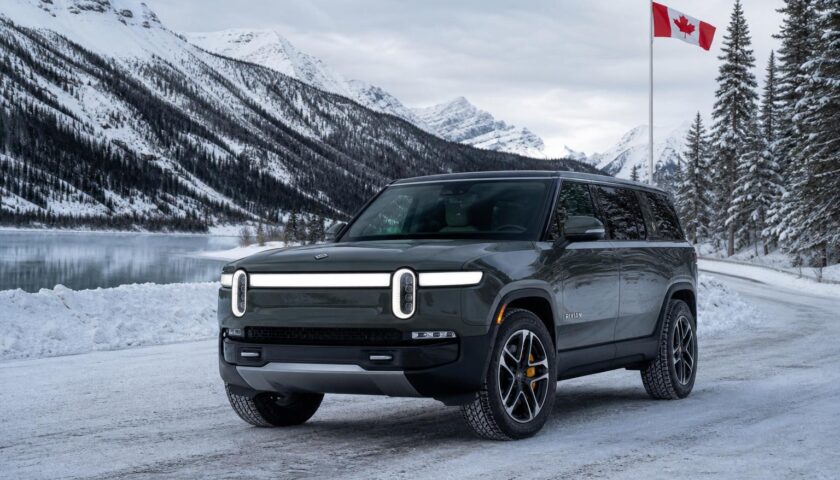
Canada is built for big skies and long drives—logging roads in B.C., cottage country in Ontario, snow belts that test your patience and your tires. Into that landscape rolls Rivian: a young electric automaker whose trucks and SUVs have been quietly popping up from Victoria to Halifax. If you’re curious about Rivian Canada—how much it really costs here, what incentives apply, whether winter range is a deal-breaker, where you’ll service it, and how it stacks up for work or play—this is your deep dive. We’ll cover the models, real-world charging across provinces, taxes (yes, the Luxury Tax), ownership tips, and road-trip strategies tailored to our roads, rules, and weather.
Think of this as a practical field guide: fewer buzzwords, more “this is how it actually works in Canada.” You’ll leave knowing what to expect, what to avoid, and how to make an electric adventure vehicle fit your life north of the 49th.
Rivian at a Glance—and Why It Matters in Canada
Rivian builds rugged, upscale electric vehicles designed to go well beyond paved suburbia. The first two consumer models are the R1T (a crew-cab pickup) and the R1S (a three-row SUV). Both share the same platform, battery architecture, air suspension, and software-first approach. The brand’s design language isn’t about chrome and posturing; it’s purposeful—rounded front “stadium” lights, clean proportions, and functional storage like a lockable gear tunnel in the R1T that swallows skis, camp stoves, or a week’s worth of hockey gear.
Why it resonates here is obvious. Canada is one of the few places where you can wake to a -30°C cold snap, commute on salt-slushed streets, then drive a few hours and end up on a rutted forest access road. A Rivian can live that double life: comfortable and quiet in the city, properly capable when the pavement ends. And yes, you’ll see the same logo on some of Amazon’s electric delivery vans in select Canadian cities—Rivian builds those too, a sign the company’s not just dabbling in EVs but shipping in serious volume.
Rivian’s Lineup in Canada: What’s Here and What’s Coming
R1T: The Electric Pickup That Doesn’t Flinch
The Rivian R1T is a crew-cab, five-seat pickup with a short bed and long talent list. It’s quick (even in the “standard” dual-motor configuration), whisper-quiet on the highway, yet willing to crawl over rocks or wade water that would make a crossover think twice. The adjustable air suspension provides generous ground clearance for off-road days and drops down for easy loading in the city. The bed is on the short side compared with full-size pickups, but it’s cleverly squared off; fold the tailgate and you can support long lumber or ladders with the integrated load rack system. There are 120V outlets available for jobsite tools or tailgates, and a sealed front trunk (frunk) for items you don’t want rained on or covered in dust.
Numbers never tell the whole story in winter, but towing capacity is stout for an EV: the R1T is rated to pull heavy recreational trailers, boats, or sled trailers. Expect meaningful range penalties while towing (more tips on that later), but traction and control are excellent thanks to instant torque and sophisticated stability systems.
R1S: Three Rows, Real Capability
The R1S takes the R1 platform and stretches it into a proper family SUV. Three rows mean you can carry kids, grandparents, and a dog without an argument about who sits where. Cargo space is generous because you’re not dedicating half the vehicle to an engine bay and transmission tunnel. The R1S rides on the same adaptive air suspension and comes with the same smarts and off-road modes as the truck, so the family ski trip in a whiteout isn’t the stress test it used to be. Max towing is lower than the R1T’s but still sufficient for a utility trailer or lightweight camper.
R2 and R3: What We Know for Canada
Rivian revealed the R2 (a two-row, mid-size electric SUV) and R3 (a smaller crossover/hatchback) with an eye toward broader affordability than the R1 twins. The R2 targets a lower starting price in the U.S., and Canadian pricing will follow closer to launch. Timelines matter: early deliveries are expected to begin in the U.S. first, with Canadian deliveries likely to follow after initial ramp-up. If you’re holding out for these models in Canada, the practical read is to plan on a multi-year horizon from reservation to driveway. The good news: size and pricing are aimed at expanding the market, and at least on paper, R2 stands a real chance of qualifying for our federal incentive caps if configured under the price thresholds when it arrives.
Motors, Batteries, and Real-World Range
Current R1 vehicles in Canada come primarily with dual-motor setups (one motor per axle) in either standard or high-output tunes. Earlier and current configurations also include a quad-motor option (one motor per wheel) prized by off-road enthusiasts for its precision and sheer torque. Battery packs have evolved, but think in terms of “Large” and “Max” capacity options. In temperate weather on highway-friendly wheels, you can expect rated ranges that, in ideal conditions, crest well above 400 km and, with the biggest packs, push further. That’s lab math. Canadian reality checks in: winter temperatures, snow tires, cargo, passengers, elevation, and how fast you drive can trim 20–40% from that on bad days. Plan accordingly, and you’ll be fine. The vehicles can fast-charge at high rates on capable DC stations and handle sustained charging well if you precondition the battery—more on networks and speeds below.
Pricing in Canada: What to Expect, and the Taxes That Surprise People
MSRP, Options, and the Reality Check
Rivian lists Canadian pricing on its en‑ca site, and it fluctuates with exchange rates, supply costs, and trim changes. The simplest guidance is this: R1T and R1S commonly land in six-figure territory in Canada once you add freight, PDI, taxes, and a few options. Choose wheels, interior upgrades, or the largest battery pack and you can quickly crest thresholds that trigger additional federal taxes. None of that is unique to Rivian—most premium EVs and trucks bump into the same reality here—but it does mean you should run the full math before you fall in love with a spec.
Federal iZEV Program: Does It Apply to Rivian Canada?
Canada’s federal iZEV rebate offers up to $5,000 on eligible new battery-electric vehicles that meet strict MSRP caps. As a rule of thumb, most current R1T and R1S builds exceed those caps and are not eligible for iZEV. That may change with future models like the R2 if Canadian pricing slots under the limit at launch. If eligibility matters to your budget, keep a close eye on two things: the base MSRP for the lowest-trim configuration and the federal program’s posted caps and terms at the time you purchase. Incentive rules can and do change with budgets and policy refresh cycles.
Provincial Incentives and Perks
The federal program gets the headlines, but provincial (and sometimes municipal or utility) programs can matter more in day-to-day life.
- Quebec: Offers a provincial rebate on new EVs via the Roulez vert program (amounts and terms can change—check the government site before purchase). Quebec also provides a separate rebate for home charging equipment and installation, commonly up to a few hundred dollars for eligible buyers.
- British Columbia: The Go Electric program provides point-of-sale rebates on new EVs, with the maximum rebate tier income-tested. For home charging, B.C. has periodically offered rebates for Level 2 home chargers, with enhanced support for multi-unit buildings and workplaces when funding windows are open.
- Ontario: No provincial rebate on new EVs at the time of writing, but “green” licence plates provide HOV/HOT lane access in certain corridors without the usual occupant requirements. Some municipalities or utilities occasionally run limited-time charger incentives.
- Atlantic Canada: Nova Scotia, Newfoundland and Labrador, and Prince Edward Island have run EV purchase rebates in recent years. The specifics (amount, eligibility, funding status) vary—confirm before purchase.
- Prairies and Territories: Incentives are more limited province‑to‑province, but there are occasional utility programs, especially for home charging.
In short: incentives shift. Bookmark your province’s energy ministry or EV program page. If you live in a condo or strata, look closely at multi‑unit building rebates, which can be generous.
The Federal Luxury Tax: The Line Many Rivians Cross
Here’s the cost item that catches many Canadian buyers: the Select Luxury Items Tax Act (commonly “Luxury Tax”). For passenger vehicles with a purchase price above $100,000, a federal Luxury Tax applies. The amount is the lesser of (1) 10% of the total vehicle price, or (2) 20% of the amount above $100,000. This is calculated before GST/HST/PST and applies to zero‑emission vehicles too.
Examples make it clear:
- If you buy a vehicle for $110,000, the Luxury Tax is the lesser of $11,000 (10% of the total) or $2,000 (20% of the amount above $100,000). You’d pay $2,000.
- At $140,000, the comparison is $14,000 versus $8,000 (20% of $40,000). You’d pay $8,000.
Once you add provincial and federal sales taxes on top, the out‑the‑door difference is non‑trivial. Budget for it if you expect your configuration to cross the threshold.
Business Use: Write‑Offs and Fleet Thinking
If you’re buying a Rivian for business, Canada offers accelerated capital cost allowance (CCA) classes for zero‑emission vehicles. The limits and class treatment differ depending on whether the vehicle qualifies as a passenger vehicle or a motor vehicle for tax purposes, and there’s a price cap for the amount eligible for accelerated write‑off. If that sentence made your eyes glaze, here’s the practical advice: talk to your accountant before you order. Structure matters—especially with vehicles that may be near or above the federal cap. Fleets also care about charging infrastructure; workplace programs in B.C. and Quebec can help offset installation costs for multi‑stall setups.
Charging in Canada: Home, Public, Connectors, and Costs
Home Charging: The Habit That Makes EV Life Easy
For most Canadians, home charging is the whole point. You leave in the morning with a “full tank” and only use public charging on road trips. Here’s what to know:
- Level 1 (120V): A standard household outlet adds only a few kilometres of range per hour. It works in a pinch, but not as a primary plan unless your daily distance is minimal.
- Level 2 (240V): The sweet spot. A dedicated 40–60A circuit and a 9.6 kW (or similar) wall charger can add dozens of kilometres per hour, easily refilling overnight. Rivian sells branded hardware, but any certified Level 2 charger that meets Canadian Electrical Code and your vehicle’s on‑board charger specs will do.
- Permits and safety: In Ontario, the Electrical Safety Authority (ESA) requires permits for new circuits; Quebec uses RBQ‑licensed electricians; other provinces have similar rules. A licensed electrician should size the circuit, check panel headroom, and install to code (remember the 80% continuous load rule).
- Rebates: Quebec commonly offers up to several hundred dollars back for home chargers; B.C. periodically funds single‑family and apartment/condo rebates; utilities like Hydro‑Québec, BC Hydro, NB Power, and municipal partners sometimes top up. Funding windows open and close—apply early.
One last tip: if you park outdoors, choose a charger and cable rated for cold weather. Stiff, icy cords are no fun at -25°C. A simple pedestal or wall mount that keeps the cable off the ground will save you shovelling and swearing.
Public Fast Charging: The Canadian Network, in Practice
Canada’s public charging landscape is a patchwork, but a competent one—especially along major corridors. You’ll encounter these names most often:
- Electrify Canada (EC): High‑power DC fast charging at highway and urban sites. App and RFID tap supported; pricing varies by province and station power.
- Petro‑Canada Electric Highway: Sites that stitch together the Trans‑Canada with DC fast chargers, often 200 kW where available. Reliable in many regions, with straightforward pricing.
- BC Hydro (and other provincial utilities): Dense coverage in B.C., with sensible kWh‑based pricing and a growing number of 100–180 kW sites.
- Circuit électrique (Hydro‑Québec): Quebec’s network is massive. You’ll find 50 kW “old but gold” stations and newer 100–180 kW ones, plus a sea of Level 2 chargers in small towns.
- FLO: Both Level 2 and DC fast, often in urban centres and municipal lots across multiple provinces.
- Ivy (Ontario), Shell Recharge, Co‑op Connect (Prairies) and others: Regional networks that fill gaps, especially around the 400‑series highways and cottage routes.
Rivian R1 vehicles in Canada use the CCS connector for DC fast charging. Many sites now deliver 150–350 kW on paper, though real‑world speeds depend on station health, temperature, and your state of charge. Rivian supports battery preconditioning when you navigate to a charger, which helps you hit peak speeds quickly—even in winter.
NACS, Superchargers, and Adapters
The industry is mid‑pivot toward NACS—the connector used by Tesla Superchargers. Rivian has committed to adopting NACS on future vehicles and has begun enabling access to a large portion of Tesla’s Supercharger network via adapters on existing CCS‑equipped models as rollouts progress. In Canada, the practical result is greater site density along major corridors and simpler winter road‑trip planning. Before you bet a long weekend on it, check Rivian’s app for supported sites and make sure your adapter and software are up to date. Not every Supercharger works with every non‑Tesla vehicle yet, and compatibility continues to expand.
Costs: What You’ll Pay to Charge
Electricity is local. Home rates vary from Quebec’s famously low hydro power to Alberta’s market‑linked volatility. At home on a typical overnight rate, many owners pay pennies per kilometre—often materially less than fueling an efficient gas SUV. Public DC fast charging is pricier: roughly $0.30–$0.60 per kWh is a fair Canadian range, with idle fees if you sit in a stall after charging completes. The Rivian app, network apps, and tools like PlugShare will show live pricing. A good habit is to fast‑charge when it meaningfully saves time and top off at home to save money.
Road‑Trip Planning: Corridors That Work Well
Three quick Canadian examples:
- Toronto–Ottawa–Montreal: The 401/416/417 and 20/40 corridors are blanketed with Ivy, Circuit électrique, FLO, Petro‑Canada, and EC sites. In an R1 with a healthy battery and winter tires, you can do normal gas‑stop durations with a single fast‑charge break.
- Vancouver–Kelowna–Calgary: The Lower Mainland has dense infrastructure (BC Hydro, EC, FLO). The Coquihalla and through to the Okanagan are well covered; the Rogers Pass stretch to Calgary requires a touch more planning but is absolutely doable, even in winter, with a couple of 20–30 minute stops at high‑power stations.
- Quebec City–Saguenay–Gaspésie: Circuit électrique shines here. Expect more 50–100 kW stations outside big centres—add a little extra buffer in winter and you’ll be fine.
Use the Rivian route planner, keep a backup network app handy, and aim to arrive with 10–20% state of charge. In deep cold, precondition the battery and warm the cabin while you’re still plugged in.
Winter and Canadian Reality Checks
Range in the Cold: What Actually Happens
Physics doesn’t negotiate: cold batteries can’t accept or deliver energy as efficiently, and heating the cabin draws power. In practical terms, expect 20–40% range loss on the worst days, less on shoulder‑season cold. You can cut the pain by:
- Preheating the cabin and battery while plugged in.
- Using seat and steering‑wheel heat instead of blasting the cabin.
- Parking indoors or at least out of the wind.
- Driving with a warm battery (avoid repeated short hops from a cold soak).
Rivian’s software helps: route to a DC fast charger to trigger battery preconditioning, watch real‑time consumption, and adjust on the fly. Once you settle into EV winter habits, the anxiety fades fast.
Traction, Modes, and Snow Road Manners
Rivian’s traction systems are a winter superpower. The instant torque means you can ease out of slippery stops, and the motor control is fast enough to catch wheelspin before it ruins your line. Off‑road and snow‑specific drive modes tune throttle mapping and traction sensitivity; the air suspension can rise over deep ruts or windrow ridges. One tip: regen braking can feel grabby on ice. Dial it back if you’re on polished surfaces—let the friction brakes (with ABS) do more work and keep the chassis balanced through turns.
Tires and Provincial Rules
Winter tires are non‑negotiable in most Canadian winters. Quebec mandates winter tires Dec. 1 to Mar. 15. In B.C., you need winter tires (or all‑weather with the snowflake) on signed routes between Oct. 1 and Apr. 30—think highway passes and the Island routes north of Nanaimo. An EV’s weight and torque are only helpful if the rubber can translate it to traction. If you’ll do a lot of winter highway driving, consider a set with a stronger load rating and don’t be shy about going narrower for snow performance if your use case allows.
Ownership, Service, and Support in Canada
Delivery, Registration, and Plates
Rivian sells direct to consumers in Canada. You configure and order online, complete paperwork digitally, and take delivery at a designated location or via a scheduled handover if offered in your area. Licensing follows your provincial process. Ontario’s “green” EV licence plates open HOV/HOT lane access even with a single occupant on posted sections; other provinces offer different perks (from discounted tolls in rare cases to preferred parking in specific municipalities). Check local rules so you don’t miss a freebie—or a ticket.
Service Network and Mobile Support
As of 2024, Rivian Canada supports owners with service centres in key hubs (notably the Greater Toronto Area and the Metro Vancouver region) and an expanding mobile service footprint for routine items. Many fixes—software updates, diagnostics, feature additions—arrive over the air. For hardware, Rivian can dispatch mobile technicians for certain repairs, while collision and complex mechanical work generally routes through a service centre or authorized partner. If you live far outside a major urban area, ask about mobile coverage and parts logistics during the purchase process so you know what to expect for routine service and worst‑case scenarios.
Warranty and Software Updates
Rivian provides a comprehensive new‑vehicle warranty and separate long‑term coverage for battery and drive units, with time and kilometre limits posted for Canada. Always confirm the current Canadian warranty booklet before you sign, as terms can evolve. On the software side, Rivian routinely ships over‑the‑air (OTA) updates that improve efficiency, add features, tweak driver assistance, and squash bugs. Owners who keep their vehicles updated tend to see steady refinements—an EV’s personality genuinely changes over time.
Insurance and Repairability
Insuring a premium EV truck or SUV in Canada looks a lot like insuring a premium gas truck: where you live, your driving record, repair costs, and theft rates drive the premium. Two tips move the needle: ask your provider about discounts tied to advanced safety systems, and park in secure or monitored locations if theft is spiking in your area. Rivian’s growing parts and service network has shortened repair timelines versus the early days, but remote owners should still ask about collision repair partners nearby.
Maintenance: The Short List
There’s no oil to change, spark plugs to swap, or timing belts to dread. Your maintenance checklist is mostly:
- Tire rotations and seasonal changeovers.
- Brake fluid and coolant checks on the manufacturer’s schedule.
- Cabin air filter replacements.
- Occasional alignments (heavy vehicles are hard on suspension geometry if you buzz rough roads often).
Regenerative braking means your pads may last a very long time, especially in city driving. If you tow or live in the mountains, check them more often.
Towing, Hauling, and Work Use in Canada
Towing: The Truth About Range
Electric trucks tow beautifully—instant torque, stable weight distribution, and quiet power under load. The trade‑off is energy consumption. Plan on roughly half your solo‑driving range while pulling a tall, blunt‑fronted camper at highway speeds. Low, narrow loads are kinder. Two key practices make towing painless:
- Route planning with chargers a bit closer together than you’d pick solo.
- Stopping at sites with easy pull‑through access or enough room to reverse without blocking lanes.
Rivian integrates trailer brake control, tow modes, and hitch guidance. In winter, expect an extra hit: cold air is dense, heaters run longer, and snowy roads create rolling resistance. Start trips with a warm battery and cabin; you’ll arrive calmer and earlier.
Payload and Bed Practicality
The R1T’s payload rating supports most recreational and light commercial needs. The bed’s clever touches—tie‑downs, power outlets, hidden storage—make it useful despite being shorter than a full‑size. The gear tunnel is a Canadian win: skis, fishing rods, and dirty recovery straps disappear out of sight. If you’re hauling materials, an in‑bed rack system keeps sheet goods secure, and the air suspension drop makes loading easier on your back.
How Rivian Compares in Canada
Rivian R1T vs. Ford F‑150 Lightning
Ford’s Lightning feels like, well, an F‑150 that happens to be electric: big cab, big bed, huge dealer network, and excellent utility. Rivian counters with tighter dimensions, more off‑road agility, luxury‑leaning interiors, and software polish. If your day job revolves around Ford’s tool ecosystem and dealer proximity, the Lightning makes sense. If you want an EV truck that doubles as a premium adventure rig and you live near Rivian service, the R1T is compelling.
Rivian R1S vs. Tesla Model X and Kia EV9
Three‑row electric SUVs are a tiny club. The Model X is efficient and integrates naturally with the Supercharger network; its falcon doors and minimalist cabin are love‑it‑or‑not. Kia’s EV9 is value‑packed, with a family‑friendly interior and mainstream dealer presence. The R1S blends serious off‑road chops with a premium cabin, and it feels more like a purpose‑built expedition SUV than a tall minivan. If your weekends involve gravel, snow, and gear, the R1S’s capability advantage is real.
What About the Tesla Cybertruck and GM’s Electric Pickups?
Availability and pricing in Canada are evolving. Tesla’s stainless wedge is trickling into the market with ongoing production scale‑up; GM’s Silverado EV and Sierra EV target full‑size truck buyers and fleet users. If you’re cross‑shopping, compare service access, charging compatibility (CCS vs. NACS timing), and bed utility alongside the obvious metrics like range and towing.
Buying Strategy and Timing in Canada
When to Order—and What to Spec
Lead times move with demand and production capacity. If you have a tight timeline (say you need a vehicle before winter), order sooner than you think. Spec for Canada, not for Instagram:
- Wheels and tires: Larger wheels look sharp but can trim range and ride quality; winter sets are easier and cheaper at smaller diameters with meatier sidewalls.
- Battery: If your routine includes regular 300–400 km drives in winter, a bigger pack buys comfort. If you mostly commute and do occasional highway trips, the mid‑pack is plenty and saves money.
- Motors: Dual‑motor is the sweet spot for most owners; quad‑motor shines if you live off‑pavement or tow in the mountains and want surgical control.
- Driver assistance: Rivian’s Driver+ system provides adaptive cruise and lane guidance on compatible roads. It’s a sanity saver on 401 crawls and winter whiteouts, but it’s not self‑driving. Eyes up, hands ready.
New vs. Used in Canada
The used EV market in Canada has matured. You’ll find R1T and R1S models with a range of mileages and early‑build quirks addressed. Shop for:
- Software state: Is the vehicle on current firmware?
- Service history: Early vehicles had a handful of fit‑and‑finish and minor component issues; confirm they’re sorted.
- Winter use: Ask about corrosion protection, especially in salt‑heavy regions around the Great Lakes and Atlantic Canada.
- Charging history: Healthy fast‑charge use is fine; chronic high‑SOC storage is not. A good seller will be transparent.
Used pricing floats with exchange rates, new‑car lead times, and seasonal demand. If you can be flexible, shopping in the shoulder seasons sometimes yields better deals.
Charging Etiquette, Trip Tactics, and Everyday Smarts
Public Charging Manners
We share the same plugs. A few courtesies keep everyone moving:
- Only use DC fast chargers when you need them; leave Level 2 for lingering.
- Don’t camp in a fast stall after your session ends. Idle fees and glares follow.
- Share intel in network apps—if a station is down or blocked, report it.
Winter Trip Playbook
Two small changes smooth out a January drive:
- Arrive at chargers with a warm battery—navigate to the site to trigger preconditioning.
- Charge to a slightly higher buffer before a long, exposed leg. Wind chill doesn’t affect batteries directly, but wind does affect consumption.
V2H and Powering the Cottage
Rivian includes 120V outlets for tools and camping, which is handy on job sites and at trailheads. Full vehicle‑to‑home backup power (V2H) is a hot topic but, as of 2024, not broadly available as a turnkey, manufacturer‑supported feature for Rivian in Canada. Watch the company’s roadmap, but plan your cottage or home backup around a generator or dedicated battery system for now.
Environment and the Canadian Grid
EVs are only as clean as their electricity. Fortunately, much of Canada runs on low‑carbon power: Quebec and British Columbia lean heavily on hydro; Manitoba and Newfoundland and Labrador too. Ontario’s mix includes nuclear, hydro, and growing wind/solar; Alberta and Saskatchewan still rely more on natural gas and coal but are transitioning. Even in fossil‑heavy grids, EVs generally reduce lifetime emissions compared with similar gas vehicles, and the advantage grows as the grid greens. If you care about your footprint, charge off‑peak when possible (easier on the grid) and watch for utility programs that reward smart charging.
Common Myths About Rivian and EV Life in Canada
“EVs Don’t Work in -30°C.”
They do. Range drops, yes. But with winter tires, preheating, and sane planning, an EV can be more confidence‑inspiring than a gas vehicle in deep cold—instant heat, better traction modulation, no cold‑start drama.
“You Can’t Tow with an EV.”
You can. You’ll stop more often. But you’ll also appreciate the torque on grades and the stability in crosswinds. Plan your route with more frequent DC fast stops and keep a generous buffer in winter.
“There’s Nowhere to Charge.”
Along major corridors, there are plenty of places. Rural gaps exist, especially in the North and parts of the Prairies, but the combination of public networks, growing Supercharger access, and home charging covers the vast majority of Canadians’ use.
Regulations and Policy: The Direction of Travel
Canada’s federal Electric Vehicle Availability Standard requires an increasing share of new light‑duty vehicles sold to be zero‑emission: a meaningful jump in 2026, ramping to 60% by 2030 and 100% by 2035. Provinces layer on their own rules and incentives. The practical takeaway is simple: the ecosystem around EVs—chargers, dealer training, grid support—will deepen year after year. If you’re early today, you won’t feel early for long.
Real‑World Scenarios: How Rivian Canada Fits Different Lives
The Vancouver Weekender
You work in Burnaby, ride the SkyTrain sometimes, and spend weekends chasing trails in Squamish. Home Level 2 charging fills your R1T overnight. You hit BC Hydro fast chargers in Hope on the way to the Coquihalla in winter and grab a coffee while the truck preconditions. On summer mountain biking trips, you stash muddy gear in the gear tunnel, keep the cabin clean, and power a portable pump from the bed outlet. Service? There’s a regional centre nearby and mobile support if you need small fixes.
The GTA Family Hauler
Two adults, three kids, hockey practice in Whitby, grandparents in London. The R1S swallows sticks and bags without the cabin smelling like a locker room. Green plates get you HOV access on the 404. Level 2 charging in your garage makes winter mornings simpler: the cabin is warm by the time you load up. Road trips to Ottawa are a single fast charge outside Kingston with Ivy or Petro‑Canada; Quebec legs are easy thanks to Circuit électrique saturation.
The Quebec Overlander
Based in Quebec City, you fish and camp in the Laurentides. Circuit électrique’s DC fast sites keep your planning low‑stress; you carry a Level 2 adapter for remote towns. Winter tires are already mandatory, and you wouldn’t skip them anyway. A provincial home charger rebate softened installation costs; off‑season, you power tools from the truck in the yard.
Actionable Checklist: Prep Your Life for a Rivian in Canada
- Get a home electrical assessment: Confirm panel capacity and permit requirements for a 40–60A circuit.
- Apply for charger rebates early: Provincial and utility funds can run out mid‑year.
- Price the whole purchase: Include Luxury Tax (if applicable), delivery fees, GST/HST/PST, and winter tires.
- Map your routine routes: Identify two reliable fast‑charging sites on each common road trip corridor.
- Order winter wheels and tires with the vehicle: Better pricing and fit, and you’re ready on delivery day.
- Learn the charging apps you’ll actually use: Rivian, Petro‑Canada, Circuit électrique, BC Hydro, Electrify Canada, FLO, Ivy.
- Plan storage: A wall‑mounted cable holder, outdoor‑rated extension for emergencies, and a tidy spot for adapters.
- Talk to your insurer: Get quotes in advance and ask about discounts for safety systems or multi‑policy bundles.
- Ask about service coverage for your postal code: Mobile service availability matters if you’re rural.
- Practice a DC fast‑charge session before your first long winter trip: Better to learn on a calm Saturday than at -20°C on the side of Highway 17.
FAQs: Rivian Canada
Is Rivian officially selling and delivering in Canada?
Yes. Rivian sells directly in Canada, has delivered R1T and R1S vehicles to Canadian customers, and operates service infrastructure in key regions, with mobile support in select areas. Check availability and delivery timelines for your province when you configure.
Can I get the federal iZEV rebate on a Rivian?
Most current R1T and R1S configurations exceed the federal iZEV MSRP caps and are not eligible. Future models like the R2 may qualify depending on Canadian pricing and trim. Always confirm the posted eligibility at the time of purchase.
Does the federal Luxury Tax apply to Rivian vehicles?
If your vehicle’s price exceeds $100,000, the federal Luxury Tax likely applies: the lesser of 10% of the total price or 20% of the amount over $100,000. This tax is in addition to GST/HST/PST. Many Canadian‑spec Rivians cross that threshold once optioned.
How much range will I lose in winter?
Plan for 20–40% less range on the coldest days, less in milder conditions. Preheating, efficient cabin heating, winter tires, and sensible speeds help. The truck’s route planner and battery preconditioning make fast‑charging smoother in deep cold.
Can a Rivian use Tesla Superchargers in Canada?
Rivian has committed to NACS and is rolling out access to many Tesla Superchargers via adapters for existing vehicles, with native NACS ports on future models. Availability varies by site and timing—check Rivian’s app for supported stations before a trip.
What public charging networks should I install on my phone?
Rivian, Circuit électrique (Quebec), BC Hydro (B.C.), Petro‑Canada, Electrify Canada, FLO, Ivy (Ontario), and Shell Recharge. PlugShare is a helpful community layer for live status and tips.
Is towing practical with an R1T in Canada?
Yes, with planning. Expect more frequent stops—roughly half solo range with tall campers at highway speed—and leverage chargers with easy trailer access. The integrated brake controller and tow modes help greatly on grades and in crosswinds.
What about maintenance and reliability?
EVs have fewer moving parts and need less routine maintenance than comparable gas vehicles. Rivian addresses most improvements via OTA software. For hardware issues, service centres and mobile techs cover many regions. As with any new brand, early builds saw minor issues that have been addressed over time.
Are there home charger rebates in Canada?
Quebec routinely offers a rebate for home charging equipment and installation. B.C. has offered rebates for single‑family homes and multi‑unit buildings during funding windows. Utilities in several provinces run periodic programs. Check your province and utility websites for current offers.
Does Ontario still offer a provincial EV rebate?
No provincial rebate on new EVs as of the latest update, but green plates provide access to certain HOV/HOT lanes without passengers. Some municipalities and utilities occasionally offer charger incentives.
Can a Rivian power my home during an outage?
Rivian provides onboard 120V outlets for tools and camping. Full vehicle‑to‑home backup (V2H) is not broadly available as a manufacturer‑supported feature in Canada at this time. Keep an eye on official updates if that’s a priority.
How does Rivian’s Driver+ work in Canada?
Driver+ includes features like adaptive cruise control and lane keeping on compatible roads. It reduces fatigue on long drives but still requires an attentive driver. Feature availability and performance improve via OTA updates over time.
What’s the best way to prepare for my first winter with a Rivian?
Install a Level 2 charger, buy proper winter tires, learn how to preheat and precondition, and practice a fast‑charge session before a big trip. Keep a snow brush and charging gloves in the frunk and a cable mat if you park outdoors.
Will the Rivian R2 be available in Canada?
Rivian has announced the R2 with U.S. deliveries targeted first. Canadian availability is expected to follow after initial production ramp‑up. Pricing and exact timing for Canada will be confirmed closer to launch.
Where can I service a Rivian in Canada?
Rivian operates service centres in major hubs (including the Greater Toronto Area and Metro Vancouver) and offers mobile service in select regions. Confirm coverage for your postal code during the purchase process.
Is an EV still cheaper to run if I pay higher electricity rates?
In most provinces, yes—especially if you charge overnight on off‑peak rates at home. Public DC fast charging is pricier and should be thought of like highway fuel stops; day‑to‑day savings come from home charging.
Can I install a home charger in a condo or apartment?
Often, yes—but it takes planning. Many provinces offer rebates and template bylaws for strata/condo boards. You’ll need building permission, electrical capacity checks, and a plan for shared costs and billing. Start the conversation early.
How does corrosion protection work with a Rivian?
The underbody is designed for tough use, but Canada uses a lot of road salt. Regular winter washes, especially underbody rinses, and periodic inspections are smart. If you drive gravel roads often, consider paint‑protection film on high‑chip areas.
What if a charger is down when I arrive?
It happens. Keep two backup sites in mind on each leg, watch live status in apps, and arrive with a buffer (10–20%). Report outages in the app so the next driver knows, and call the network’s support line—many can reset a unit remotely.
Final Word: Should You Buy a Rivian in Canada?
If you want an electric vehicle that’s as happy threading Toronto traffic as it is disappearing up a logging road, Rivian belongs on your shortlist. The trucks and SUVs feel purpose‑built for Canada’s contradictions: premium but practical, quiet but adventurous. The financial picture demands homework—Luxury Tax, provincial incentives, installation costs, insurance—but once the math pencils out, day‑to‑day life is easy: charge at home, plan winter trips with common‑sense buffers, and enjoy a vehicle that keeps getting better with updates.
Rivian Canada isn’t just a search term; it’s a growing community of owners figuring out new routines that work in our climate and on our roads. If that sounds like you, there’s a good chance an R1T or R1S will fit right in beside the canoe, the snowblower, and the stack of trail maps.