
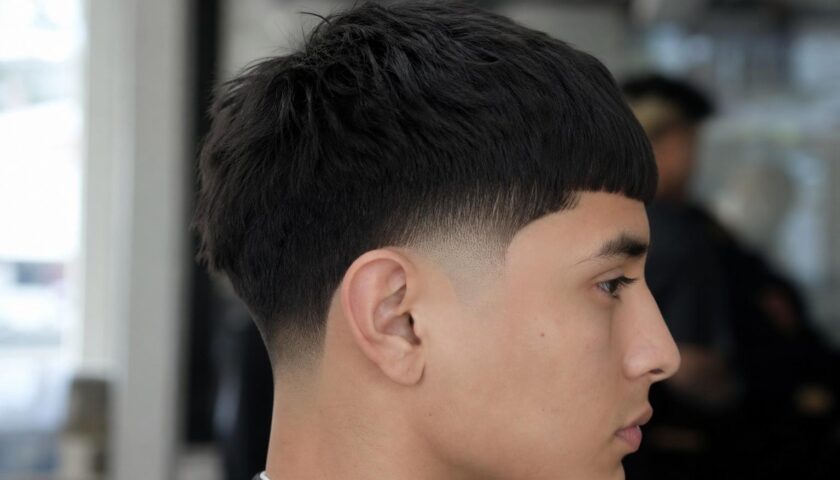
If you’ve seen sharp fringes, clean fades, and a confident, boxy silhouette popping up from Toronto subway cars to Calgary skate parks, you’ve probably clocked the edgar haircut. It’s a modern, high-impact cut that blends a tight fade with a blunt textured fringe and a crisp line-up. It started in Mexican and Latinx communities, crossed into football locker rooms and TikTok, and now lives everywhere—barbershops on St. Laurent, Surrey strip malls, student salons in Halifax. This guide breaks down every angle of the edgar haircut for Canadians: who it suits, how to ask for it, how to style it through winter hats and summer humidity, what it costs across the country, and how to make the look feel like yours.
What Is an Edgar Haircut, Really?
At its core, the edgar haircut is a structured contrast: short on the sides and back (usually a fade or taper) with a straight or slightly arched fringe at the front, cut blunt and worn forward. Texture on top can be choppy, wavy, or curly, but the outline stays decisive. The sideburns and nape are usually cleaned up with a clipper or foil shaver, and a line-up defines the hairline along the forehead and temples.
Think of it as a cousin of the Caesar cut and textured crop, but pushed bolder. The fringe is heavier, the fade is tighter, and the line-up is crisper. In some regions it’s nicknamed the “Takuache haircut” or “Mexican Edgar,” a nod to its roots in Latino youth culture and truck scenes along the Texas–Mexico border. In Canada, it’s become a flexible template: lean and athletic for hockey players, high-fashion and editorial in Montreal, or loose and fluffy on wavy West Coast hair.
Why It Works in Canada
Canada’s climate forces haircuts to pull double duty. The edgar haircut does that well. In winter, it fits under a toque without collapsing into chaos; in summer, the cropped sides and short fringe handle sweat and humidity. It’s quick to style before an early GO Train or a 7 a.m. shift, and it photographs cleanly—a bonus for graduation pics, corporate headshots, or content creators who need a consistent on-camera look.
It also suits Canada’s mix of hair textures. Whether you’re working with pin-straight Asian hair in Richmond, tight curls in Brampton, or thick wavy hair in Winnipeg, the edgar has routes to flatter your texture without fighting it. And because barbers across the country have leaned hard into fades and line-ups over the past decade, the cut’s technical demands match what many Canadian shops already do well.
Core Elements of an Edgar Cut
The Fringe
The hallmark. Typically 1–4 cm long (roughly 0.5–1.5 inches) and cut blunt. The fringe can be squared or subtly curved. On straighter hair, your barber may point-cut or use a razor to add choppy texture so it doesn’t sit like a helmet. On curls, the fringe is controlled but not iron-flat—think defined, not ironed.
The Sides and Back
Most edgar haircuts use a fade: low, mid, or high. A low fade starts around the top of the ear and is the most conservative. A mid fade begins around the temple and balances contrast and versatility. A high fade carves aggressively into the sides, exaggerating the top’s weight and making the head look taller. Alternatives include a taper (softer, longer-lasting between cuts) or a drop fade (the fade dips behind the ear), which hugs the head shape nicely on rounder skulls.
The Line-Up
That straight, crisp outline at the forehead and temples is a line-up (a shape-up). On some hairlines, especially with significant cowlicks or widow’s peaks, your barber may soften or angle the line to avoid cutting too far back. The goal: clean, not cartoonish.
Texture and Finish
The top ranges from fluffy and airy to tight and gritty. Products matter. Matte paste or clay gives grit. Sea salt spray builds lift on fine hair. Curl cream and a diffuser preserve definition for wavy and curly versions. The finish shouldn’t look glossy—this cut thrives on a modern, matte texture.
Who the Edgar Haircut Suits (and When to Tweak It)
Face Shape
- Round faces: Go higher with the fade and square off the fringe. Add vertical height with a matte paste to elongate.
- Square faces: Keep the fringe a touch longer and slightly curved to soften angles. A low or mid fade keeps balance.
- Oval faces: You can wear the classic template. Most choices work—choose based on hair texture and lifestyle.
- Heart-shaped faces: Avoid an extremely short, heavy fringe; it can exaggerate forehead width. Opt for a slightly piecey fringe and a lower fade.
Hair Texture
- Straight hair: Needs intentional texture. Ask for point cutting, razor detailing, or micro-chops on top so it doesn’t sit like a bowl.
- Wavy hair: A dream match. A mid fade with a 2–3 cm textured fringe gives movement without bulk.
- Curly hair: Keep the fringe longer and cut dry for accuracy. Diffuse with a touch of cream—avoid gels that plate the curls to your forehead.
- Coily hair: The line-up will look ultra-sharp. Consider a sponge or twist texture up top and maintain edges weekly if you prefer crispness.
- Fine/thin hair: Lower contrast fades and lightweight sea salt spray help keep fullness. Avoid over-thinning with texturizing shears.
- Thick hair: Embrace debulking and internal layering. Clays and creams over gels to control without crunch.
Popular Edgar Variations in Canadian Cities
Classic Edgar Fade
Blunt fringe, mid fade, matte finish. Ubiquitous in Toronto and Mississauga, easy to style in under two minutes. Great first step if you’re new to the look.
Low-Fade Edgar (Office-Friendly)
A soft, low fade with a slightly longer top. Pair with a tapered neckline if your workplace leans traditional. Common with Bay Street interns and co-ops who need polish Monday to Friday and edge on weekends.
High-Fade Edgar (Athletic)
Aggressive fade, minimal bulk, tight line-up. It survives hockey helmets and HIIT classes without collapsing. Popular among varsity athletes in Winnipeg and Regina.
Curly Edgar
Defined curls up top with a controlled fringe, usually cut on dry hair for precision. Diffused or air-dried. Seen often in Montreal and Ottawa where curl-friendly barbers are common.
Fluffy Edgar
A softer, airier version that rides current K-pop-adjacent texture trends. Blow-dried with sea salt spray; fringe broken into soft shards. Big in Vancouver and Burnaby.
Edgar with Design
Faded sides plus a hard part, side design, or nape motif. If designs are new to your school or workplace, start small. Many high schools allow designs; some athletic teams ask for conservative styling for events—ask first.
Edgar Mullet Hybrid
Yes, the edgar mullet exists: blunt front, faded sides, and a tidy tail. It’s a fashion-forward mix—the kind of thing you’ll see in Kensington Market or Mile End. Keep the back neat; aim for intentional, not neglected.
Burst Fade or Drop Fade Edgar
Shaping the fade around the ear (burst) or dipping at the back of the head (drop) can flatter round head shapes and thick parietal ridges. It also keeps more coverage against winter wind around the occipital bone.
How to Ask for an Edgar Haircut in a Canadian Barbershop
Walk in with a plan. Don’t rely on a single word; edgar haircut means different things shop to shop. Your best move is clarity and a photo (two angles) of what you want on a head that resembles yours—texture, density, curl pattern.
- Say the style and the vibe: “I’m after an edgar haircut—clean fringe, textured top, and a mid fade that’s not too high.”
- Specify the fade: low, mid, or high; tightness (skin, 0, 0.5, or 1 open). If you want a taper instead, say so.
- Call out the fringe: “Blunt across with a slight arc; land it about 2 cm above my brows.” If you have cowlicks, mention them.
- Line-up preference: “Crisp at the corners, don’t push my hairline back.”
- Texture on top: “Choppy, not spiky. No thinning shears near the fringe.”
- Neckline: tapered vs squared (taper looks cleaner for longer under collared shirts).
- Styling routine: “I’ve got 2 minutes in the morning. Product should be matte, no crunch.”
In Quebec, “dégradé” means fade and “frange” is fringe. If you’re in Montreal and more comfortable in French, you can say, “Un dégradé moyen avec une frange droite texturée et un contour net, s’il vous plaît.” Bilingual barbers are common in larger centres.
The Barber’s Blueprint: Technical Breakdown
Curious what’s happening behind the chair? A well-executed edgar haircut follows a sequence that keeps the lines crisp and the balance right:
- Consult and map the fringe length. Discuss hairline challenges and cowlicks.
- Section the top forward, isolate the fringe.
- Create the fade baseline (e.g., mid) with a #0 or skin using a trimmer or foil shaver below the line.
- Build the fade: zero gap, #0.5, #1, #1.5, #2, using lever control; blend into the parietal ridge. For a drop fade, dip the guideline behind the ear.
- Scissor-over-comb to keep weight where the top meets the sides so the fringe doesn’t look disconnected unless that’s the goal.
- Cut the fringe blunt on slightly damp or dry hair for accuracy. Texturize with point cutting or a razor if the hair is straight and bulky.
- Detail with a trimmer and straight razor for the line-up. Only minimal pushing of the hairline—respect long-term growth.
- Style with a matte product, check symmetry facing the mirror. Adjust fringe arc if the brows sit unevenly.
Good barbers in Canada will also sanitize clippers and combs between clients (public health requires proper disinfectants and single-use blades). If you see clean stations and labelled barbicide jars, you’re in safe hands.
Maintenance: How Often to Get It Cut
The edgar haircut looks best with sharp edges. Plan:
- Full cut: every 2–4 weeks depending on fade tightness and growth rate.
- Edge clean-up: every 10–14 days if you like a crisp line-up.
- At-home interim: a trimmer on the neckline and around the ears can buy you a week, but avoid touching the fringe.
Pro tip: Book your next appointment at checkout. In major cities, Friday and Saturday slots vanish fast—especially before long weekends and graduation season.
Styling the Edgar: Products That Work in Canadian Conditions
For Straight Hair
Use a sea salt spray on damp hair, blow-dry forward with medium heat, then emulsify a pea-sized amount of matte paste or clay through the fringe and top. Avoid slick pomades; you’ll lose the modern texture and look shiny under office LEDs.
For Wavy or Curly Hair
Work a curl cream or lightweight cream-gel through damp hair, diffuse low while scrunching forward. Finish with a touch of matte paste only on the ends to define the fringe. If humidity frizzes you out in July, a light anti-humidity spray helps without freezing the hair.
For Coily Hair
Moisture first. Use a leave-in conditioner, then a curl cream or butter on top. Twist-sponge if you like definition. Keep the line-up sharp with a trimmer every week, and add a non-greasy edge control if you prefer ultra-crisp corners.
Budget and Canadian Availability
Drugstore wins you can find at Shoppers Drug Mart, London Drugs, or Jean Coutu: Got2b Texture Clay, L’Oréal Studio Line Matt & Messy, Marc Anthony Curl Cream. Barbershop and salon picks: Reuzel Matte Clay, Redken Brews Clay Pomade, Moroccanoil Curl Defining Cream. Online Canadian retailers like Chatters, Well.ca, and Amazon.ca usually keep stock nationwide.
Seasonal Care: The Edgar vs. Canadian Weather
Winter (Dry Air + Hats)
Cold, dry air plus a toque can flatten and dehydrate hair. Use a leave-in conditioner once or twice a week to fight static and flakiness. Try a satin-lined beanie to reduce friction. After taking your hat off, spritz a little water or sea salt spray, then pinch texture back into the fringe. Avoid heavy waxes; they turn brittle in sub-zero temps.
Spring (Rain + Wind)
Keep a travel-size matte paste in your jacket. If your commute includes damp buses in Vancouver or Halifax drizzle, finger-comb the fringe forward when you arrive and add a touch of product to reset the texture.
Summer (Humidity + Sweat)
Pre-style with sea salt spray for lift, set with a light matte cream. Look for anti-humidity sprays if your hair balloons in July. Rinse sweat with cool water after workouts; salt buildup makes hair feel straw-like.
Fall (Transitional)
Reassess length. Fall is a good time to nudge the fringe slightly longer before winter hats return. Book maintenance before Thanksgiving or Halloween house parties; chairs book up.
Canadian Workplace and School Realities
Most Canadian workplaces won’t police a tidy edgar haircut, especially with a low or mid fade. Uniformed roles (food service, healthcare, security) care more about hygiene and hair off the face. If you’re client-facing on Bay Street, a taper or low fade with a softened fringe reads cleaner while keeping the vibe.
Schools and universities are generally relaxed. That said, check team codes if you play sports—some coaches want conservative looks for tournaments or media days. If you’re under 18, patch-test any new product to avoid scalp irritation before game day.
On rights and respect: Canadian human rights laws protect against discrimination based on race, which includes natural hair and cultural hairstyles. Nova Scotia explicitly amended its Human Rights Act in 2020 to protect natural and protective hairstyles as part of racial identity, and bodies like the Ontario Human Rights Commission have clarified that hair-based discrimination related to race is not acceptable. If you ever face pushback rooted in cultural bias, you have avenues to respond through provincial human rights commissions.
Costs Across Canada: What You’ll Pay
Prices vary by city, the barber’s experience, and whether you add a beard lineup or design. Taxes differ by province (GST, HST, or PST+GST), and many shops prefer cash for tips. Here’s a general snapshot for an edgar haircut with a fade and line-up, excluding tip:
| City | Typical Price (CAD) | Notes |
|---|---|---|
| Toronto (GTA) | $35–$70 | Trendy downtown shops run higher; suburban spots in Brampton/Scarborough often mid-range. |
| Vancouver | $40–$75 | Central and Kits/Yaletown shops lean premium; Surrey/Burnaby more moderate. |
| Montreal | $30–$60 | Mile End/Plateau trend salons mid-to-high; Hochelaga and NDG more budget-friendly. |
| Calgary | $30–$60 | Downtown and Beltline slightly higher; NE and SE often lower. |
| Edmonton | $28–$55 | Varies widely; ask about student discounts. |
| Ottawa | $30–$60 | ByWard Market premium; South Keys and Barrhaven moderate. |
| Winnipeg | $25–$50 | Plenty of barbers offering combo hair+beard deals. |
| Halifax | $28–$55 | Downtown and Spring Garden Road on the higher side. |
| Victoria | $35–$65 | Smaller market but premium barbers exist near downtown. |
| Saskatoon/Regina | $25–$45 | Solid value, shorter waitlists. |
Tipping norms are 15–20% nationwide. Many shops use booking apps like Booksy or Fresha and may require a small deposit to reduce no-shows. Always read cancellation policies; 24–48 hours’ notice is standard.
How to Choose a Barber in Canada (and Spot the Real Pros)
Look for consistent fades and straight, balanced fringes in their photos. If every fringe looks identical on different heads, be cautious; the best barbers tailor the line to the face. Cleanliness counts—tools sprayed or jarred between clients, fresh razor blades, neck strips used under capes.
Licensing and training vary by province. In Ontario, hairstylist is a compulsory trade: to work independently as a hairstylist you typically need a Certificate of Qualification through Skilled Trades Ontario. In Alberta and other provinces, hairstyling is a designated trade with apprenticeship routes and Red Seal endorsements, though rules about compulsory certification differ. Across the country, shops must follow local public health guidelines: proper disinfection, single-use razor blades, and safe handling of chemicals. If you’re unsure, ask how they sanitize tools—pros will answer comfortably.
DIY: Can You Cut an Edgar at Home?
You can attempt a simplified version if you’re comfortable with clippers and ready to accept a learning curve. Keep expectations realistic. The tight blend and symmetrical fringe are where home haircuts go wrong. If you’re trying:
- Clipper guards: #0.5, #1, #1.5, #2. Start low and blend up slowly on a low or mid fade.
- Use a comb as a hard cap line to avoid taking the fade too high.
- Cut the fringe last, on dry hair. Straight across with small, vertical snips to avoid a harsh “bowl.”
- Line-up lightly with a trimmer. Don’t chase perfection; pushing the hairline back is hard to undo.
If you need the haircut for interviews or graduation photos, book a pro. Home attempts tend to show in harsh lighting and high-resolution cameras.
Face Shape and Measurement Guide
If you’re torn between low, mid, and high fade or fringe length, use simple measures:
- Short forehead to brow distance: Keep the fringe shorter (1–1.5 cm) to avoid closing the face.
- Prominent cheekbones with a narrow jaw: Low fade and a slightly curved fringe balance the top-heavy effect.
- Tall forehead: A 2–3 cm fringe that sits just above the brows looks strong without shouting.
Common Mistakes—and How to Avoid Them
- Cutting the fringe too high: It can look severe and artificial. Ask your barber to cut conservatively, then refine.
- Over-thinning straight hair: Thinning shears over the fringe can cause see-through patches. Opt for point cutting.
- Ignoring cowlicks: If your swirl lives near the front, you need a slightly longer, heavier fringe to sit flat.
- Over-razoring line-ups: A perfect first-day line often becomes angry red bumps on sensitive skin. Barber skill and light pressure matter.
- Product overload: The edgar is about controlled texture, not a lacquered wall. Start with less, build if needed.
The Edgar vs. Other Short Cuts
Edgar vs. Caesar
Both push the hair forward. The edgar is sharper with a bolder fringe and crisper line-up; the Caesar is softer, often combed forward with a gentle, natural edge and a scissor taper.
Edgar vs. French Crop
The French crop leans European—more scissor work, diffused edges, and a narrow fringe. The edgar’s fade-to-fringe contrast is stronger.
Edgar vs. Bowl Cut
The bowl is a continuous weight line around the head. A modern edgar can flirt with that vibe but uses a fade to break the line, keeping the result contemporary.
Beards and the Edgar
Beards can anchor the contrast-heavy top. If you wear facial hair:
- Keep cheek lines crisp to echo the forehead line-up.
- Fade the sideburn into the beard to avoid a “stuck-on” look.
- Short boxed beards pair well with high fades; longer beards balance low fades.
- Ask for a beard line-up add-on—most shops price it separately ($10–$20 extra in many cities).
Sports, Helmets, and the Edgar
Hockey hair meets the edgar surprisingly well. For helmets:
- Keep the top under 3–4 cm; overly long tops mat under helmets.
- Use a tiny amount of cream pre-game to prevent friction frizz; reset post-game with water and paste.
- Consider a drop fade rather than a high fade to keep warmth at the back of the head in winter rinks.
Hard Water, Chlorine, and Hair Health
Hard water is common in Prairie cities and parts of Southern Ontario. Mineral buildup makes hair dull and stiff. If your fringe feels gummy even after washing, try a chelating shampoo once every 1–2 weeks and follow with conditioner. Swimmers: rinse hair before and after the pool; a quick pre-wet reduces chlorine uptake. A leave-in conditioner can protect the fringe from drying out and splitting.
Cultural Context and Respect
The edgar haircut’s rise is tied to Latino creativity and community style. In Canada, where so many cultures intersect, it’s worth wearing the look with awareness and courtesy. Appreciate the style’s roots, credit barbers and creators when you post, and stay open to listening if someone shares what the cut means in their community. Fashion travels; respect keeps it welcome.
Getting Photo-Ready: Content Creators and Pros
If you’re on camera—YouTube, TikTok, or professional headshots—avoid ultra-glossy products that blow out under lights. Matte products photograph best. Ask your barber for a slightly denser fringe if you shoot in 4K; tiny gaps read larger on high-resolution sensors. Bring a lint roller—short hairs on dark shirts ruin thumbnails faster than anything.
Growth Plan: If You Want to Move On
Not sure you’ll want an edgar forever? Grow-out is manageable. Ask your barber to soften the fringe and raise the weight line over two visits. You can evolve into a textured crop, a side-part with a micro fringe, or even a short quiff without an awkward middle stage.
Metric Cheat Sheet: Guard Sizes and Fringe Lengths
| Clipper Guard | Approx. Length (mm) | Notes |
|---|---|---|
| #0 (open/skin) | 0–1 | “Skin fade” territory with trimmer/foil finish. |
| #0.5 | 1.5 | Good bridge between skin and #1. |
| #1 | 3 | Common mid section of fades. |
| #1.5 | 4.5 | Softens transitions. |
| #2 | 6 | Low contrast sides on conservative versions. |
| #3 | 10 | Very soft taper or grow-out maintenance. |
Fringe lengths for most edgar haircuts land between 10–25 mm for blunt control. Curly and coily textures can push longer while still reading “edgar.”
Real-World Examples: Matching Lifestyle to the Cut
Student on a Budget (Waterloo)
Ask for a mid fade to skin, blunt 2 cm fringe, and textured top. Opt for a taper at the neckline for longevity. Use drugstore matte clay and sea salt spray. Rebook every 3–4 weeks; get a $10 line-up at the 2-week mark if needed.
New Grad in Finance (Toronto)
Low fade, 1.5–2 cm fringe slightly curved, soft line-up. Keep beard light and lined. Use Reuzel Matte Clay sparingly. This reads sharp without scaring HR.
Chef (Vancouver)
High fade for heat management, fringe 1–1.5 cm with extra texture. Matte cream that can reset after a 12-hour shift. Bring a travel-size product to work.
Amateur Hockey Player (Edmonton)
Drop fade, 2–3 cm on top, semi-curved fringe. Pre-game leave-in to reduce friction; post-game rinse and restyle. Book trims aligned with the season’s schedule.
What to Tell Your Barber If You Have…
- Cowlick near the front: “Let’s keep the fringe a touch heavier and cut it dry so we see how it sits.”
- Receding corners: “Light line-up, don’t push back. Keep corners soft.”
- Acne or sensitive skin along the hairline: “No foil shaver on irritation; clippers only and a cool towel finish.”
- Scalp dryness in winter: “Gentle shampoo schedule, maybe every other day, and a leave-in on the fringe.”
Health, Hygiene, and Barbershop Standards
Across Canada, barbershops follow local public health rules: disinfect combs and clippers with approved solutions, use neck strips, and dispose of single-use razor blades safely. If a service involves a straight razor line-up, a fresh blade per client is non-negotiable. You can politely ask how tools are sanitized—professionals expect it. If you ever experience a nick, your barber should apply an antiseptic. If you have a blood-borne condition, you’re not obligated to disclose it, but you’re entitled to safe, hygienic service like anyone else.
Troubleshooting: If the Cut Didn’t Land
It happens. Maybe the fade climbed too high, or the fringe feels off. Here’s what to do:
- Wait 5–7 days. Hair settles. What feels extreme on day one can look perfect once natural oils return.
- If a line-up was pushed back, avoid repeated edging; let it grow forward for two weeks, then ask for a very light shape-up.
- If the fringe sits too heavy, ask for point cutting to break the line—don’t raise it unless you’re sure.
- Own the texture. Often, product choice fixes 80% of the issue.
Where to Find Inspiration (Canada-Focused)
Search Instagram and TikTok for tags like #edgarhaircut, #edgarfade, #torontobarber, #vancouverbarber, #montrealbarber, or your neighbourhood plus “barber.” Pay attention to hair types close to yours. If the barber’s feed shows a lot of the look you want on textures like yours, that’s a green flag.
Sustainability and Minimal Waste Choices
If you’re trying to live lighter, pick refillable products (some salons in Toronto and Vancouver offer refills for select brands). Use a single, versatile matte cream instead of a lineup of half-used jars. Keep your hair at a length you can style without hot tools most days; your hydro bill and mornings will thank you.
Trends to Watch in 2026
- Softer fringes: Still blunt, but with micro-steps and arc shapes that move under light.
- Hybrid fades: Drop/burst combos that sculpt the head shape instead of following one strict guideline.
- Texture-first styling: Less gel, more air-dried finishes with sea salt and lightweight creams.
- Edgar + beard symmetry: Clean transitions between temple and beard with subtle curves replacing super-sharp corners on some faces.
FAQs
What do I literally ask for to get an edgar haircut?
Say: “An edgar haircut with a [low/mid/high] fade to skin, a blunt textured fringe about [1–2 cm] above my brows, a clean line-up that doesn’t push my hairline back, and matte texture on top.” Show a photo of your goal on similar hair.
Is the edgar haircut professional enough for Canadian offices?
With a low or mid fade and a slightly softened fringe, yes. Keep edges neat, product matte, and beard tidy. If your office is conservative, skip designs and high-contrast fades.
How often do I need to cut it?
Every 2–4 weeks for peak sharpness. Book a quick line-up at the two-week mark if you like crisp edges between full cuts.
Will it work on curly or coily hair?
Absolutely. Keep the fringe longer, cut it dry for accuracy, and style with curl cream. The line-up will look especially clean on tighter textures.
Is it the same as a Caesar cut?
No. A Caesar is softer with a natural edge and less contrast. The edgar’s fringe is blunter, and the fade and line-up are more defined.
How much does an edgar haircut cost in Canada?
Typically $25–$75 depending on city and shop, plus tax and tip. Downtown premium shops cost more; suburban barbers often charge less.
Can I get an edgar if I’m thinning?
Yes—choose a lower-contrast fade and keep the top slightly longer with lightweight texture. Avoid over-thinning the fringe, which can look sparse.
Any winter-specific tips?
Use a leave-in conditioner once or twice a week, consider a satin-lined toque, and reset texture with a light mist of water or sea salt spray after you take your hat off.
Is there cultural sensitivity around the style?
The cut grew from Latino communities. Wear it with respect, credit inspiration when you share, and be open to the style’s cultural roots. Canadian human rights protections also cover natural and cultural hairstyles from discrimination.
Will helmets wreck the look?
Not if you keep the top moderate and reset with water and a small amount of matte product post-helmet. A drop fade maintains warmth and coverage at the back for winter sports.
Bottom Line
The edgar haircut is bold but wildly adaptable to Canadian life—snow to sun, office to rink. Nail the communication, choose a fade that suits your face, keep the fringe honest, and treat texture like your strongest accessory. Done right, it’s fast to style, great in photos, and surprisingly low maintenance. If you’re ready for edges that look intentional instead of accidental, this is your cut.